Air styling is an approach in which directed warm air and the shape of the attachment work together. How is it different from a straightener and a curling iron, and how should you prepare your hair? This guide covers how it works, the role of the Coanda effect and five practical tips.
A dryer, a straightener and a curling iron can create different styles, but they work in different ways. With a traditional curling iron, the section is shaped by contact with a heated surface. With a straightener, the hair passes between two plates. An air multistyler uses directed warm air to dry and shape the hair at the same time.
That difference matters. Heat damage depends not only on whether a tool is used, but also on the temperature, how long the hair is processed, the distance from the heat source and how many times the same section is passed over. Air styling can therefore offer a gentler approach — especially when it reduces direct contact with a hot surface and the need to pass over the hair again and again.
How does heat affect the hair?
The outer part of the hair is covered by the cuticle — fine overlapping layers that help protect its inner structure. High temperature and prolonged or frequent heating can roughen that surface and make the hair drier, harder to comb and more prone to breakage.
With tools that have a heated surface, the hair touches the curling iron or the plates directly. If the tool is held on a section for a long time, or the same area is processed several times, that zone receives concentrated heat. A higher temperature and prolonged heating from a short distance can increase the heat load on the hair.
That does not mean every contact with a heated tool will necessarily damage the hair. It means that control of temperature, time and repeats matters.
Air styling: what is different?
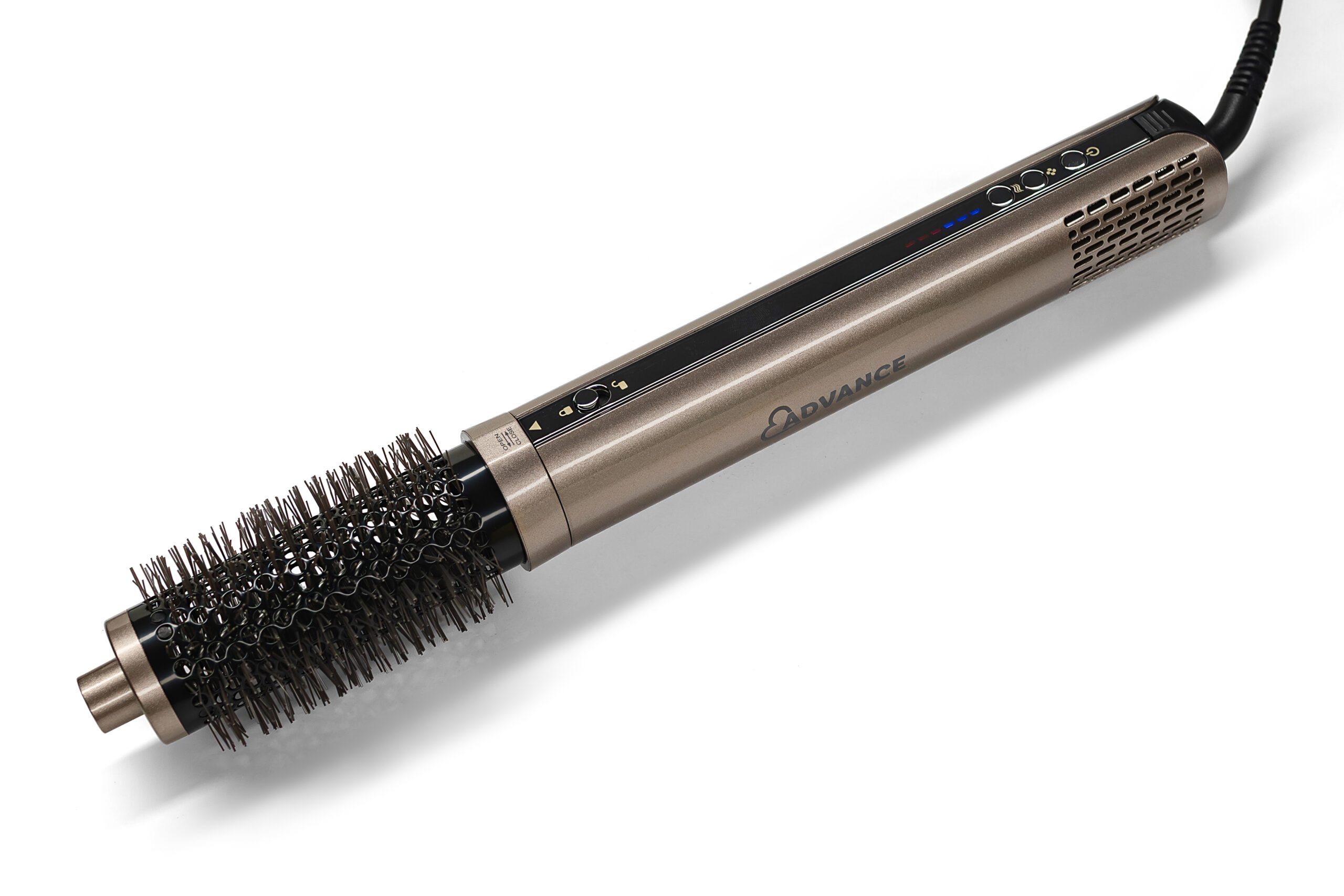
An air multistyler directs warm air at the section and uses attachments of different shapes. With a cylindrical attachment, the airflow follows the curved surface and can draw the section towards it. The hair wraps around the barrel while the air dries it and helps shape it. This phenomenon is called the Coanda effect.
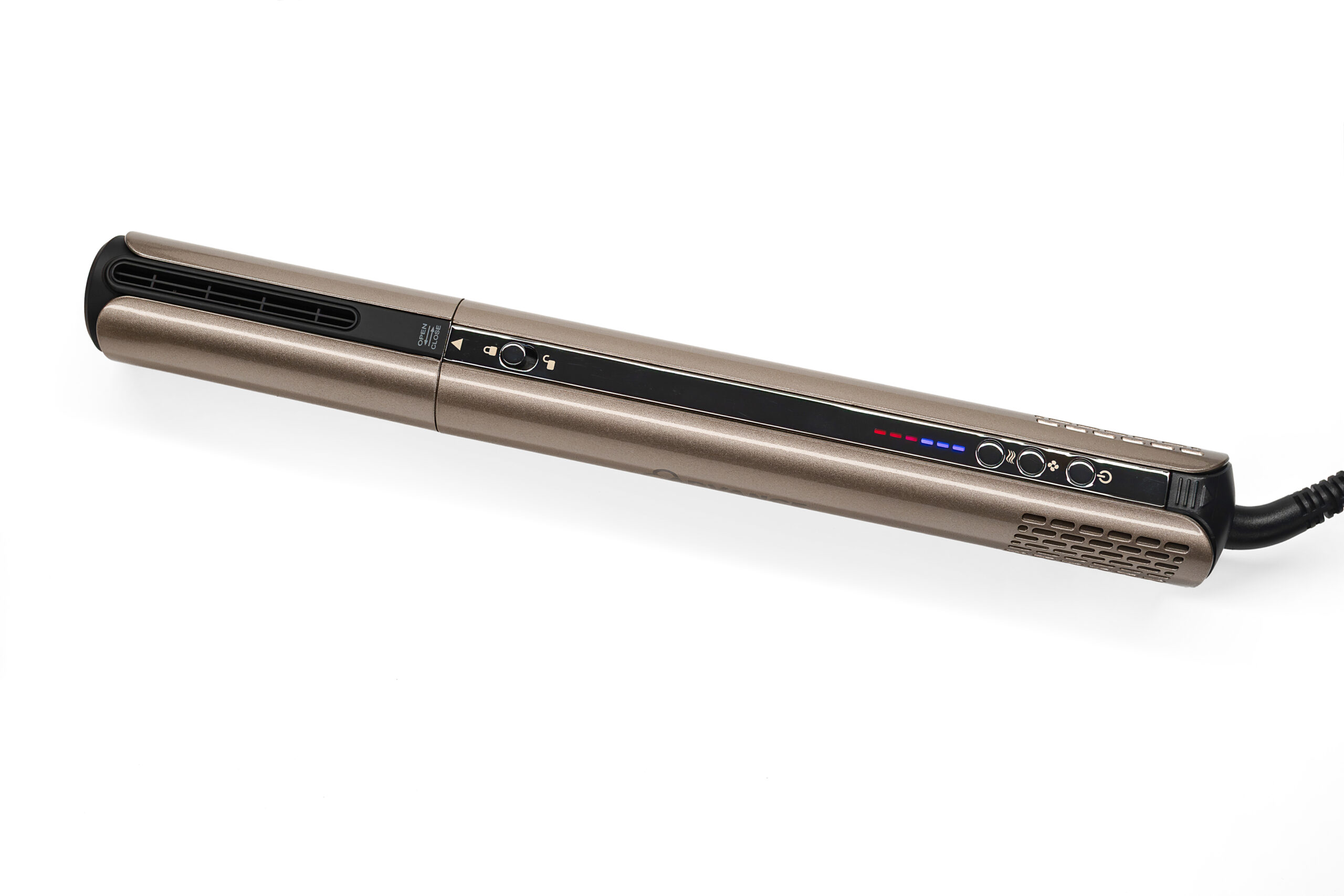
With a smoothing attachment, warm air is directed along the length of the section while it is arranged. A round brush helps shape the roots and the ends. The result does not come only from pressure between two hot plates: the air and the shape of the attachment take part in the process together.
When the section dries in the desired shape and then cools, the style holds for a time. So it matters not only which attachment you choose, but also how large the section is, how dry the hair is and whether you give it time to cool.
Why can less direct contact be useful?
The main possible benefit is a reduction in strongly concentrated heat on one small part of the hair. With air styling, every section does not have to be pressed between hot surfaces in order to create a shape.
It can also help with a more consistent routine. The hair is dried and styled in one process, instead of being dried completely first and then processed again with separate tools. That can avoid some of the repeat styling — although the real result depends on technique and on how many times you pass over the section.
It is important to be precise: air styling does not mean styling without heat, and it does not guarantee an absence of damage. If the air is very hot, the tool is held in one place for a long time, or the hair is processed repeatedly, the heat load remains. The difference is in how the heat is delivered, not in the heat disappearing.
Why does the hair need to be almost dry?
For styling with air attachments, the hair should be prepared according to the instructions for the specific tool. For MyAdvance Multistyler Pro, the product guidance recommends approximately 95% dry hair — almost dry to the touch, with a little residual moisture. The attachment then finishes the drying while it shapes the section. That is guidance for this model, not a universal percentage for every air styler.
The tool then does not have to remove all of the water before styling begins. The aim is to combine the final drying and the shaping without unnecessarily prolonged heating.
Hair that is almost dry, small sections and an even movement of the tool are practical steps towards more controlled styling.
How does air styling make a styling routine easier?
The benefit is not only in the finished style. One set with different attachments lets you move from drying to curls, volume or smoothing without changing several separate tools. That makes the routine more orderly and can reduce repeat processing if the hair is prepared and styled in sequence.
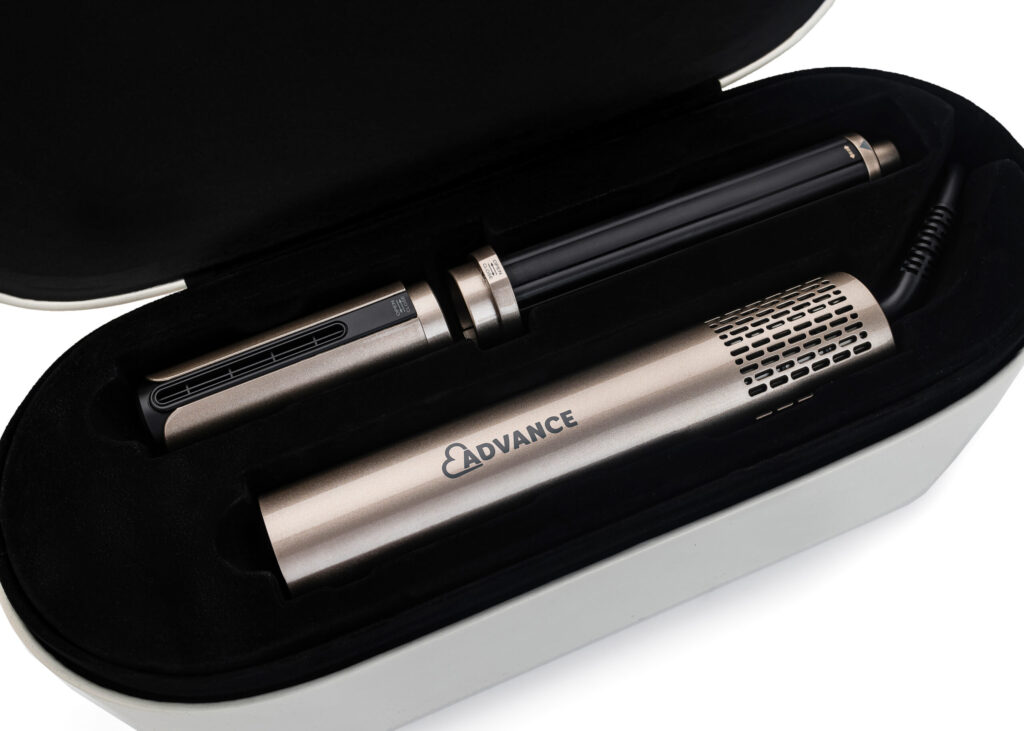
For example, the MyAdvance Multistyler Pro 5 in 1 — hair multistyler includes an ionising dryer nozzle, a hot-air round brush, 26 and 38 mm barrels with two-way airflow, and a warm-air straightening attachment. These attachments give different ways to dry and style, while the principle stays the same: directed air and a suitable attachment shape.
5 tips for air styling
- Dry the hair almost completely before you start styling with the attachments.
- Work with small, even sections so you do not have to repeat the process.
- Keep the tool moving and do not hold warm air on one spot for a long time.
- Let shaped curls cool before you comb or loosen them.
- Follow the instructions for the specific tool and use suitable heat protection when the product is compatible with the styling method you have chosen.
What to remember about air styling
An air multistyler shapes hair through a combination of directed airflow, heat and the shape of the attachment. This approach can reduce the need for direct contact with hot plates or barrels and make styling and drying easier in one routine.
The most realistic promise is not that heat has no effect at all. The benefit is the chance to create curls, volume or a smoother look with less direct contact and better control of the process — provided the tool is used correctly.
Frequently asked questions about air styling
Does air styling mean styling without heat?
No. The air is warm and can stress the hair if the temperature is too high, if it is held in place for a long time, or if the process is repeated many times. The advantage of the approach is a different way of delivering heat and the possibility of less direct contact with hot plates.
What is the Coanda effect on a hair multistyler?
It is the airflow following a curved surface. On a suitably designed cylindrical attachment, it helps the section to be drawn in and wrapped around the barrel while the air finishes drying and shaping the hair.
Should the hair be wet or dry?
Follow the instructions for the tool and the attachment. For Multistyler Pro, the guidance is that the hair should be almost dry, with a little residual moisture. Do not take that as permission to use a classic straightener or curling iron on wet hair.
Can an air multistyler replace a straightener?
It can create a smoother look with a suitable attachment, but the result depends on hair type and technique. On strongly curly hair, the effect can differ from that of a classic straightener.
Why do my curls drop quickly?
Possible reasons are sections that are too large, drying that is not quite finished, a humid environment, or separating the curls before they cool. Change one element of the technique at a time and choose products for your hair. Hold is not the same for every hair type.
Choose a tool for the way you style
If you want curls, volume and smoothing with air, look at the MyAdvance Multistyler Pro 5 in 1 — hair multistyler and its attachments. If you prefer traditional styling with a heated barrel, compare it with the Advance Revolva professional curling iron. These are different ways of working — choose according to the style you want and what your hair needs.
Browse all hair products or contact the MyAdvance team if you have a question about a specific attachment or model.