The Coanda effect is the phenomenon that helps airflow follow the curved surface of an attachment. When a section of hair wraps around the barrel of a multistyler, it can look as if the tool is sucking it in. In fact, directed air guides the section and makes it easier to shape.
How does air create a curl, why does section size matter, and what does that mean for an everyday style? Here is how the principle works and how to use it with more confidence.
How does the Coanda effect work?
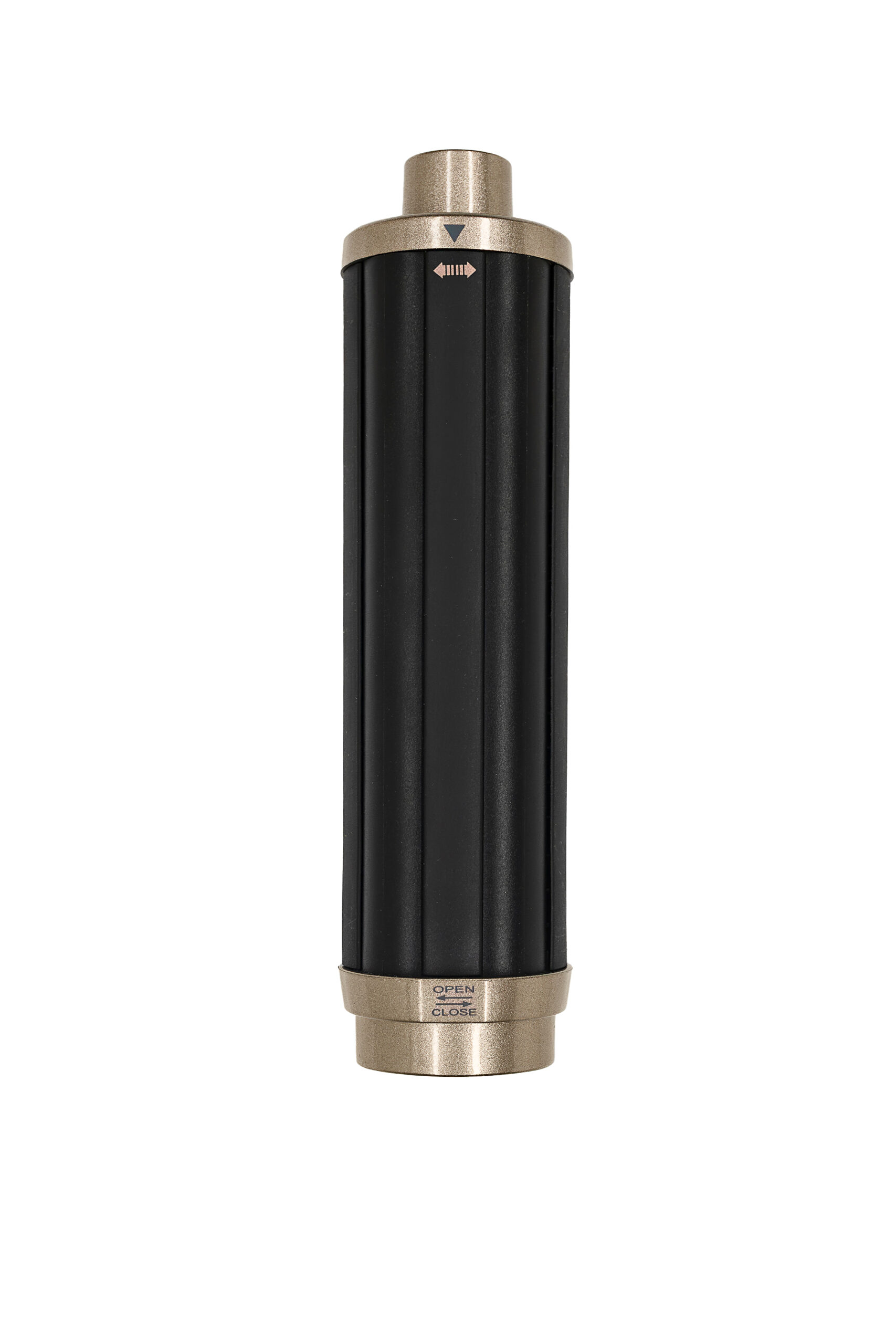
The Coanda effect describes the tendency of a jet of air to follow a nearby curved surface and travel along it. On a multistyler, that surface is the cylindrical attachment. The air moves around it and can lead a nearby section so that it wraps around the barrel.
This is not mechanical winding and it is not vacuum suction. The section moves under the influence of the air. The shape of the attachment, the direction and strength of the airflow, and the size of the section all affect the result.
How does the air shape the curl?
The hair is placed close to the barrel, and the airflow leads it around the attachment. Warm air helps the section dry in that shape. After you release it, it is best to let it cool before you comb or loosen it.
It is usually easier to work with hair that is almost fully dry, in small, even sections. A section that is too wet or too large can be harder to shape. Preparation should follow the instructions for the specific model and attachment.
For more detailed preparation, also read our guide to air styling. It looks at the difference from a straightener and a traditional curling iron, and at the role of heat in styling.
What makes this way of styling easier?
The airflow can lead the section around the attachment by itself, so you do not have to wind every section by hand. The hair is shaped while it finishes drying, and different attachments let you move between curls, volume and smoothing.
The result depends on the texture and length of the hair, the size of the sections and your technique. After a little practice it becomes easier to control the direction and shape of the curls.
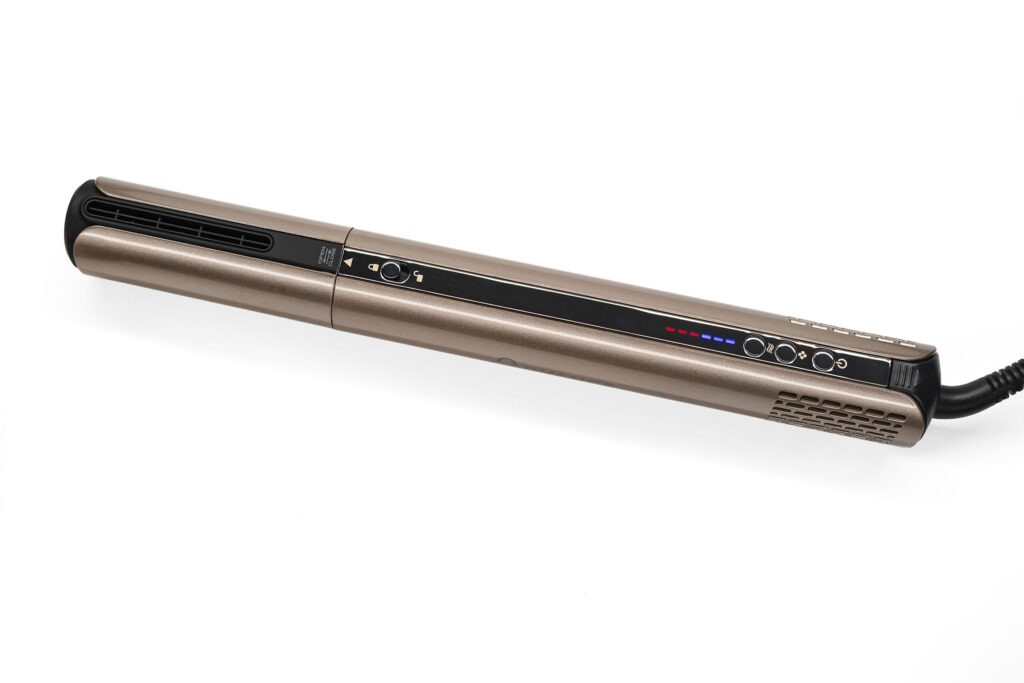
On the MyAdvance Multistyler Pro 5 in 1 — hair multistyler, the cylindrical curl attachments are 26 and 38 mm, with an L/R direction choice. The two diameters are different starting points for the look. Section thickness and how you separate the curl afterwards also affect the shape, so do not expect the same result on every head of hair.
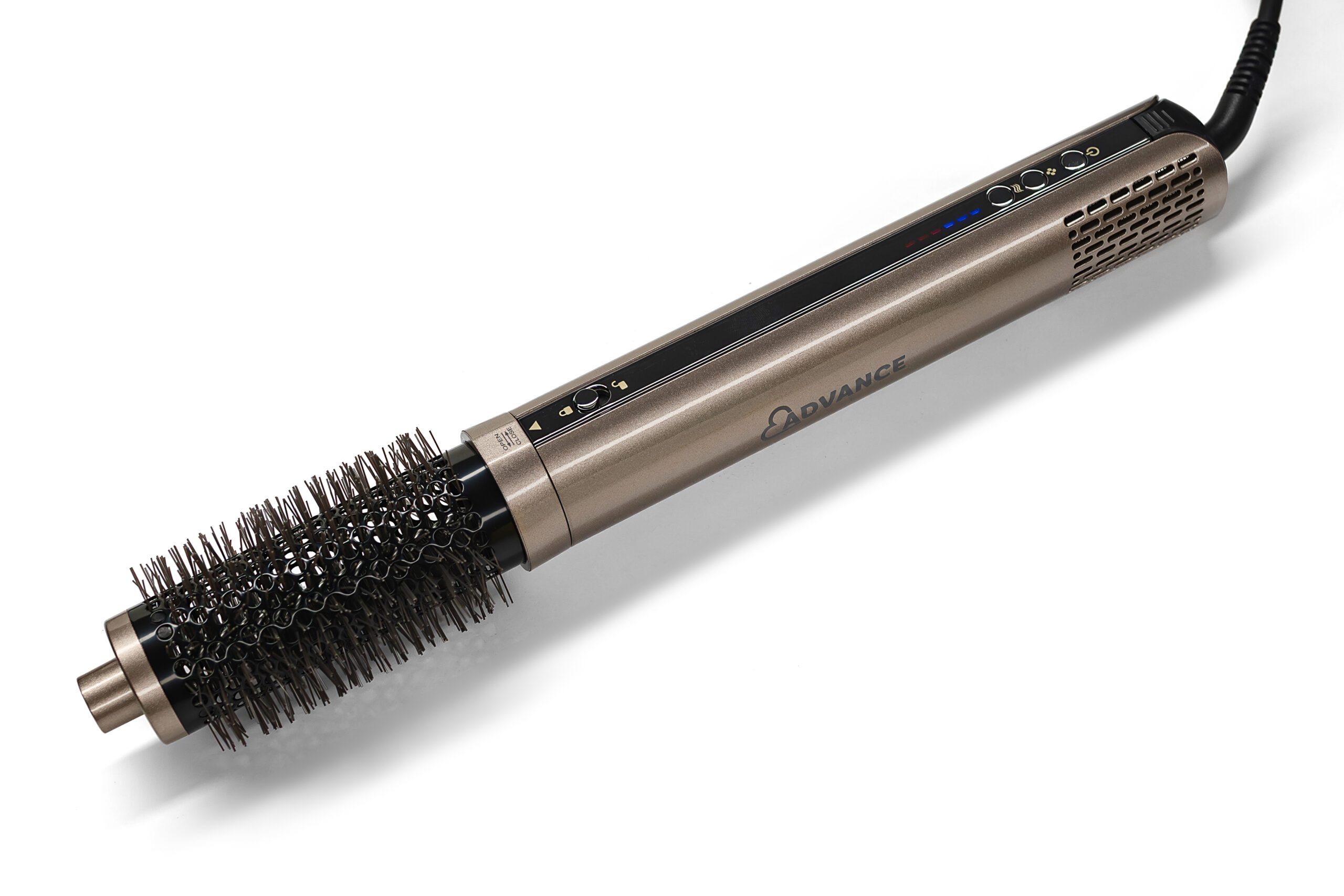
5 tips for curls with the Coanda effect
- Prepare the hair according to the instructions. For Multistyler Pro, the product guidance is about 95% dry hair — almost dry to the touch, with a little residual moisture. That percentage is not universal for every tool.
- Take a small, even section. If the section is too large, the air may not cover it evenly. Start with a smaller section instead of extending the processing time indefinitely.
- Bring the ends to the correct zone of the attachment. Let the air lead the hair and follow the movement shown in the instructions. Do not press or force the wrap.
- Choose the styling direction. On attachments with L/R, choose the direction according to the movement you want. Match it to how you want the hair to fall around the face.
- Give the curl time to cool. Release it carefully and do not comb it immediately. After it cools, you can leave it defined or separate it with your fingers for a looser wave.
Does this mean less damage to the hair?
The Coanda effect does not, by itself, protect hair from heat. Air styling can reduce the need for prolonged direct contact with a hot surface, but warm air can also stress the hair if the temperature is too high or the exposure lasts too long.
That is why it is important to follow the tool’s instructions and not hold the air on one spot for long. Use suitable heat protection according to the product guidance and the method you have chosen. There is no basis for promising styling with no effect at all simply because of the physical phenomenon.
Frequently asked questions about the Coanda effect
Why does the section not wrap around the attachment?
Check that you are using the correct cylindrical attachment and direction, that the section is not too large, and that the hair is prepared according to the instructions. Section size, the position of the ends and residual moisture are good places to start. If you are unsure, look for guidance for the specific model.
Do all attachments style with the Coanda effect?
They do not do the same job. In this article we are talking about wrapping a section around a cylindrical air attachment. The round brush and the smoothing attachment work with a different shape and technique.
Can the direction of the curls be changed?
On Multistyler Pro, the cylindrical attachments offer an L/R choice. Use the control according to the instructions and choose the direction for the style you want.
Does the style last the same on every head of hair?
No. Texture, length, humidity, preparation, section size and the final cool-down all play a part. Hair products matter too. Give yourself time to find the sequence that suits your hair.
The Coanda effect on MyAdvance Multistyler Pro
On the MyAdvance Multistyler Pro 5 in 1 — hair multistyler, the principle is used with cylindrical attachments to shape curls in either direction. Once you understand how the air leads the section, it is easier to choose the attachment and technique for the style you want.
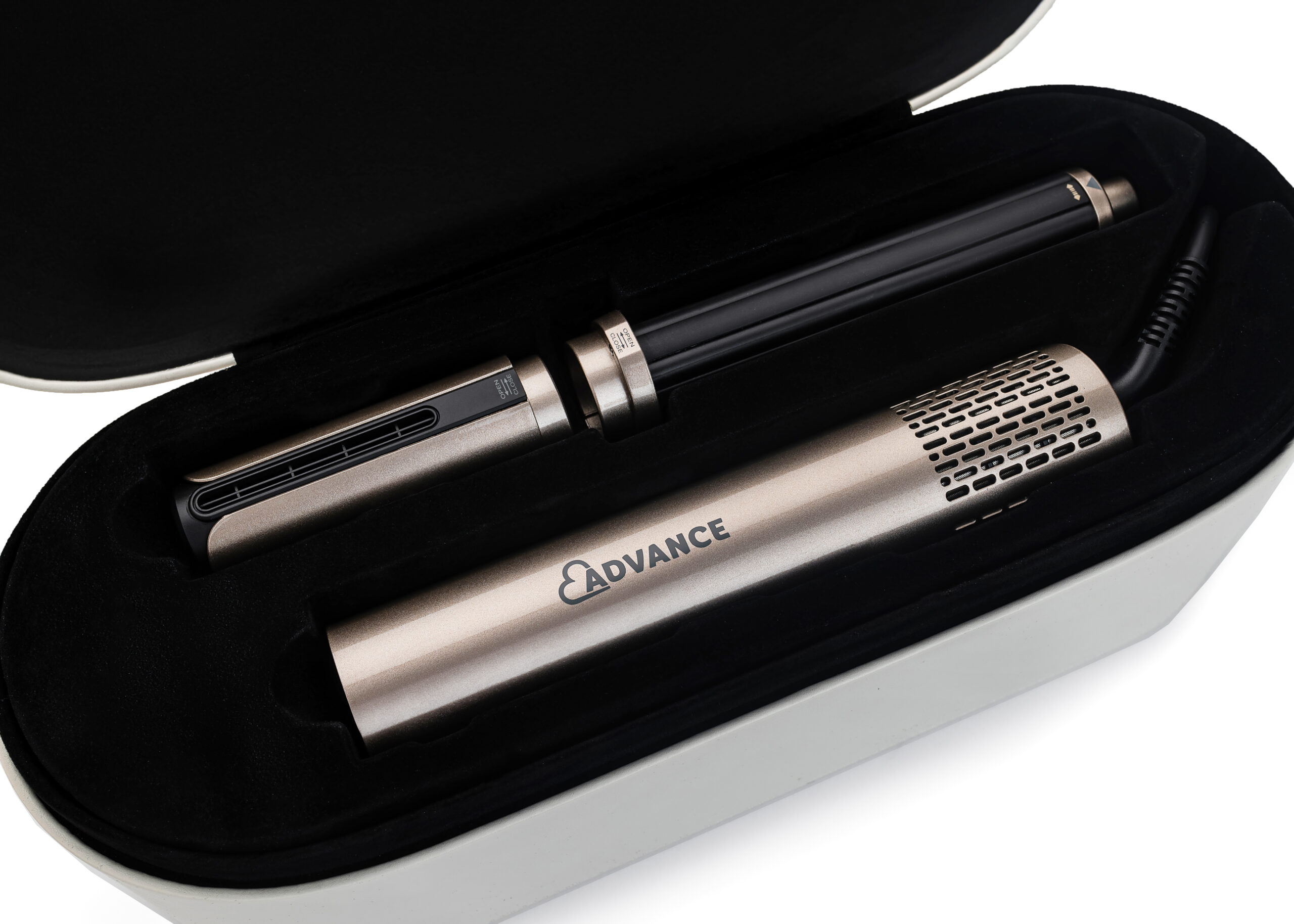
To compare different ways of styling, browse our catalogue of hair tools. If you are unsure about an attachment or a technique, contact the MyAdvance team.