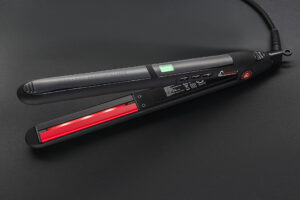
If you use a straightener regularly, you have probably noticed that hair can look “straight” without looking “healthy”. Dry ends, breakage and a loss of shine are common consequences of aggressive heat. That is where the main difference comes in: an infrared hair straightener is designed to work more gently, heating the hair in a different way and reducing the risk of damage.
In this article you will find out what infrared technology is, what its real advantages are and who it suits best.
What is an infrared hair straightener?
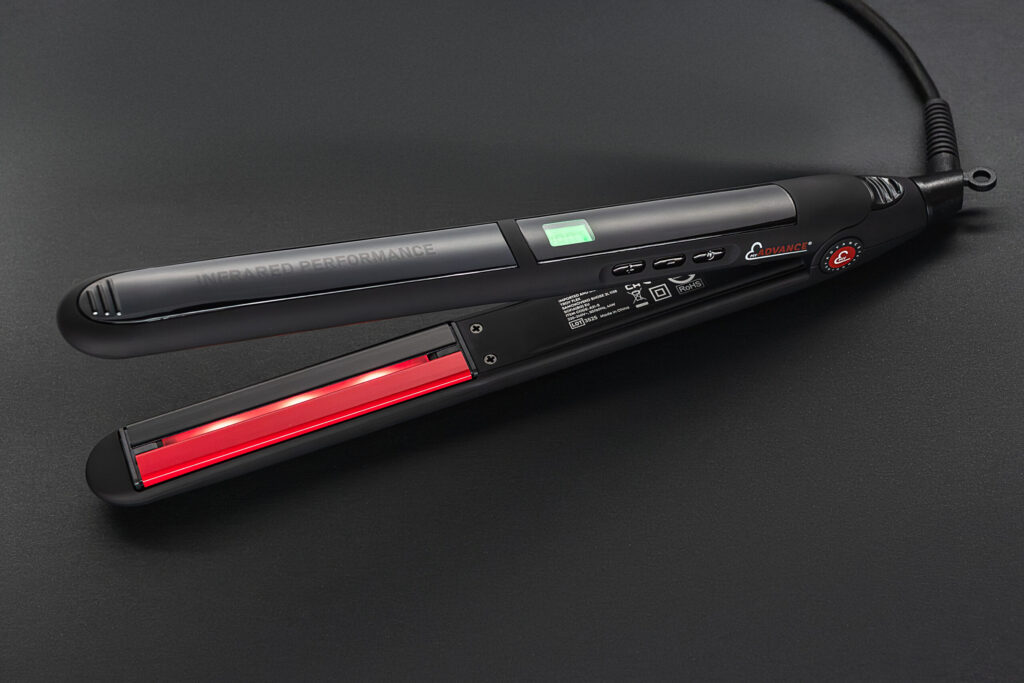
An infrared hair straightener is a professional tool for straightening and styling that uses infrared technology. Unlike standard straighteners, which heat the hair mainly on the surface, an infrared straightener heats the hair from the inside out.
That means:
- a more even distribution of heat
- less thermal “shock” on the surface
- more controlled straightening with less damage
How does infrared technology work?
Infrared rays penetrate the structure of the hair and support even heating in depth. Instead of “baking” the outer layer, the heat is distributed in a more stable and controlled way.
The result is usually:
- a lower temperature needed for a good effect
- fewer passes through the section
- minimal loss of moisture in the hair
That is why infrared straighteners are preferred in hair salons and by clients who want a salon result with a gentler approach to the hair.
Advantages of an infrared straightener: why is it better for the hair?
1) Less damage with regular use
When hair is heated too strongly and only on the surface, it can become dry and brittle. Infrared technology reduces the risk of:
- breakage
- split ends
- thinning with frequent heat styling
2) Better moisture retention and a softer finish
One of the biggest differences is how the hair feels after styling. With even heating, the hair more often stays:
- softer to the touch
- more elastic
- with a more natural shine
3) Excellent for lamination and restorative treatments
An infrared straightener is often used for hair lamination and restorative procedures because it:
- activates the products more effectively
- supports deeper penetration into the hair
- extends the effect of the treatment
That is why almost every modern “laminating straightener” relies on infrared technology.
4) Suitable for coloured, blonde and tired hair
If your hair is coloured or lightened, it is more sensitive to high temperatures. An infrared straightener is a better choice for:
- coloured hair
- blonde or lightened hair
- chemically treated hair
A further benefit that is often noticed is that the colour keeps a fresher look.
Infrared straightener versus a standard straightener: what is the difference?
- How it heats:
- Infrared straightener: from the inside out
- Standard straightener: mainly on the surface
- Risk of damage:
- Infrared straightener: lower
- Standard straightener: higher (especially at a high temperature and with many passes)
- Suitable for lamination:
- Infrared straightener: yes
- Standard straightener: more limited
- Moisture retention:
- Infrared straightener: better
- Standard straightener: weaker
Who is an infrared straightener for?
An infrared hair straightener is a good choice if:
- you use a straightener often (at home or in a salon)
- you have coloured or lightened hair
- your hair is dry, tired or prone to breakage
- you are looking for a tool for lamination and restorative treatments
If your goal is a smooth result and also a healthier look for the hair over time, infrared technology is a logical next step.
Short tips for the best result (and less damage)
- Always use heat protection before straightening.
- Work at a lower temperature, especially on fine or coloured hair.
- Pass through the section less often, but evenly.
- Do not use a straightener on wet hair unless the tool is specifically designed for that.
At MyAdvance we offer infrared straighteners that combine reliable technology, comfortable use and a real effect on the hair. If you are looking for models suitable both for lamination and for everyday use, browse our product category.